In 1971, an astronaut carried seeds to the Moon because he loved trees. In 2022, NASA carried seeds back out because the story was too good to let end. These are the two flights that made the Moon Trees possible — and the very different worlds they came home to.
January 31, 1971
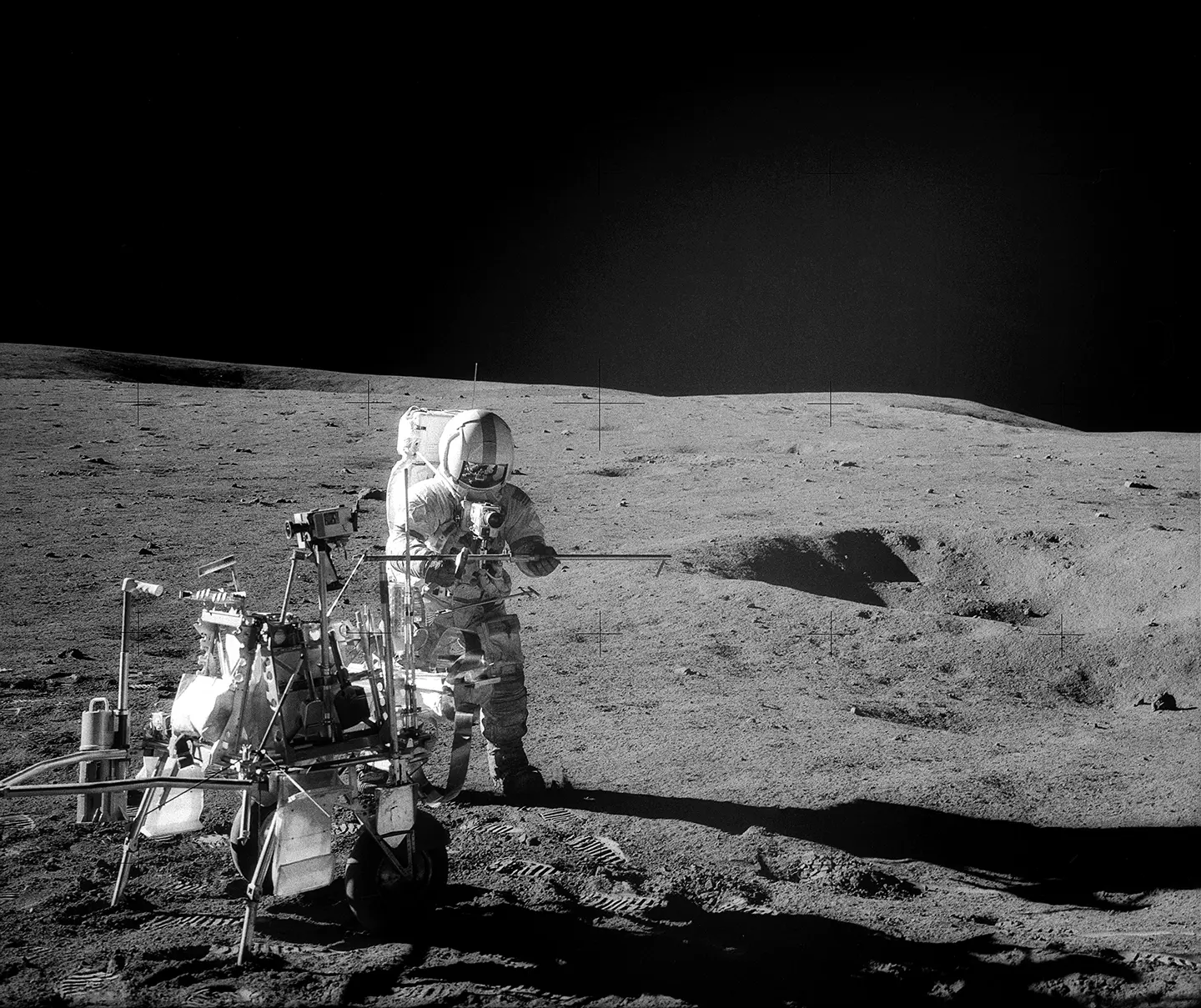
Stuart Roosa was not supposed to be famous. He was the command module pilot — the astronaut who stays in orbit while two others walk on the surface. While Alan Shepard and Edgar Mitchell descended to Fra Mauro, Roosa circled the Moon alone in the command module Kitty Hawk, completing 34 orbits over two days.
What he carried with him was unusual. Roosa had spent his early career as a smoke jumper for the U.S. Forest Service — parachuting into wildfires, saving trees for a living. When the Forest Service learned he’d been selected for Apollo 14, the Chief of the Forest Service reached out. The result was a small metal canister tucked into Roosa’s personal kit: hundreds of seeds from five species, chosen and packaged by a Forest Service scientist named Stan Krugman.
The seeds orbited the Moon. Then they came home.
The return was nearly a disaster. During decontamination after splashdown, the seed canister burst open. Seeds scattered across the chamber and were exposed to vacuum. Everyone assumed they were dead. Krugman gathered them up anyway, sent them to Forest Service stations in Mississippi and California, and waited.
Most of them grew.
The seedlings were distributed quietly, mostly in 1975 and 1976, timed to coincide with the nation’s bicentennial. They went to state capitols, national forests, universities, Girl Scout camps, elementary schools, and foreign dignitaries. A loblolly pine was planted at the White House. Trees went to Brazil, Switzerland, and Japan. No complete list was ever kept. No systematic tracking was ever made.
Roosa died in December 1994. Many of his trees are still alive. Some are gone. Many are simply unknown.
Image Credit: NASA/Edgar D. Mitchell
November 16, 2022
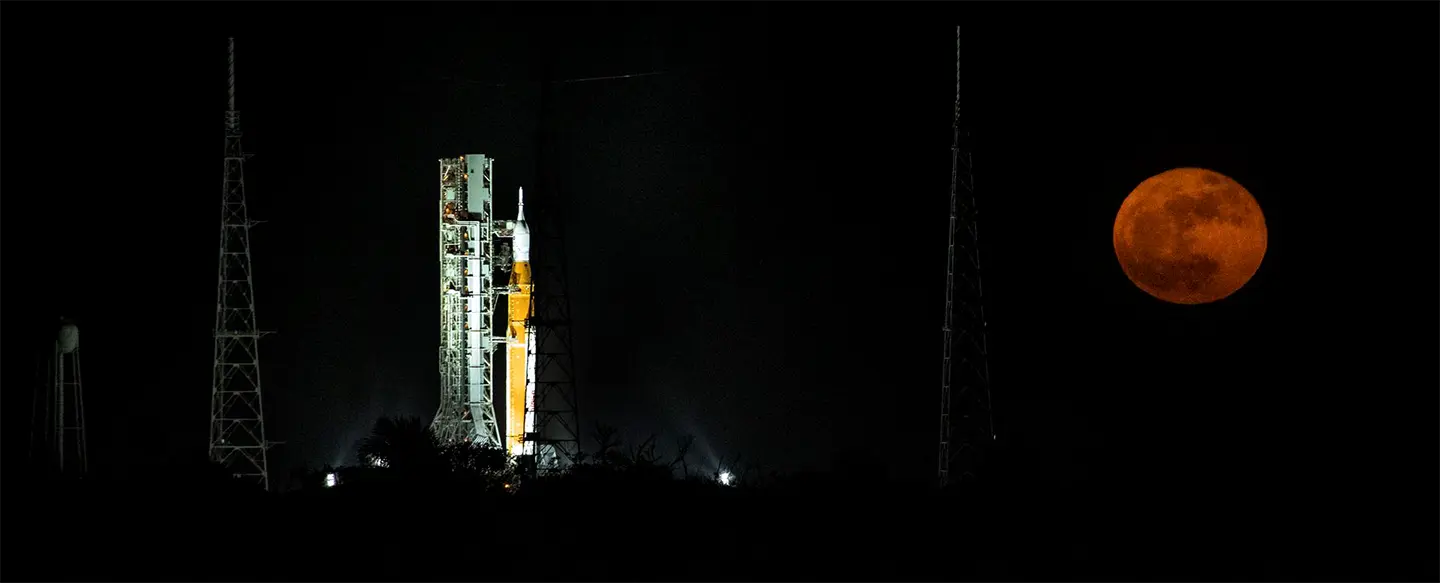
Fifty-one years after Apollo 14, NASA launched Artemis I — an uncrewed test flight of the Orion spacecraft, the first mission of the program intended to return humans to the Moon. Tucked aboard were seeds from five species: loblolly pine, sycamore, sweetgum, Douglas fir, and one new addition, bald cypress.
The seeds spent about four weeks in space, traveling thousands of miles beyond the Moon before returning to Earth. This time, the records were kept.
NASA’s Office of STEM Engagement partnered with the U.S. Department of Agriculture Forest Service to grow the seeds into seedlings and distribute them to schools, museums, libraries, universities, and community organizations across the country.
More than 1,000 organizations applied. Recipients were selected across multiple planting cycles beginning in spring 2024.
This generation of Moon Trees is younger, better documented, and actively growing into institutions that will tend them, teach with them, and if everything goes well, watch them outlast everyone in the room.
The Apollo trees were planted and largely forgotten. Many went unmarked. The people who tended them often didn’t know what they had. Decades later, researchers and curious visitors started finding them — in botanical gardens, behind courthouses, at the edge of school playgrounds — with no sign, no plaque, no record of what made them different from every other tree on the grounds.
The Artemis trees have a better chance of being remembered. But only if people keep track.
That’s what this project is for.